 Academic publishing is a mess. However, despite the ongoing issues academics have with traditional publishing companies (e.g., signing over the copyright of their work, reviewing manuscripts for free, getting takedown notices for sharing copies of their own articles), the clear majority of academics continue to publish their work only in “closed” journals (i.e., those requiring a subscription to access). At the same time, though, a growing number of faculty have begun publishing their work in open-access journals. One of the problems though faculty face, even in the field of educational technology (where we love things digital), is the proliferation of open-access journals. For instance, today there are over 270 open access journals related to the field of educational technology in some way. This can be overwhelming. Further, there seem to be constant reports about predatory publishers which further dissuades faculty from publishing in open-access journals. But Perkins and I, based in part on our experience with highly reputable open-access journals–like Australasian Journal of Educational Technology (AJET), Educational Technology and Society, and the International Review of Research in Open and Distributed Learning (IRRODL) to name a few–decided to investigate what educational technology researchers who have published in open-access journals actually think of these journals. You can read the results of study online: http://ajet.org.au/index.php/AJET/article/view/2578
Category Archives: Uncategorized
SLIDES: Michael Johnson’s “Uses of Video Annotation Software to Promote Deep Learning”
New Elective at Boise State this summer — Introduction to Openness
This summer we are pleased to offer a special topics elective called Introduction to Openness. This is an important topic that focuses on issues related to open content, open software, open online courses, and more.
Course description: This is a studio model course examining major areas of openness, the impact on education, and instructional design. Students will create and revise several project artifacts, and will interact heavily throughout the development cycle. Key elements include examining the centeredness of education, questioning what human-centered education might look like, and exploring openness in education through a human-centered design lens.
Video overview from the instructor: https://drive.google.com/file/
Syllabus: http://edtech.boisestate.edu/
Instructor bio: Fred Baker is an educator and Instructional Designer who has worked in higher education since 2008. He holds a Ph.D. in Instructional Design and Development, and a B.S.B.A. in Entrepreneurship from the University of South Alabama. His research and consulting interests focus on the relationship between technology, organizations, and people. He is intrigued by the potential of openness and human-centered design to improve organizational culture and empower learning and performance. He has authored more than 24 peer-reviewed publications, and presented more than 35 times at conferences and events in this subject area. He is active in professional associations, serves as a column editor for the AECT scholarly journal TechTrends, and has served as a reviewer for various journals, books, and conferences. You can connect with him and view his portfolio at www.fredwbaker.com.
Registration information:
EDTECH 597: Special Topics – Introduction to Openness
Section: 4202
Class Number: 42131
Instructor: Dr. Fred Baker
2nd 7-week session: 06/27/2016 – 08/14/2016
If you have questions about the course please email the instructor at: fredrickbaker@boisestate.edu
WCET Outstanding Work Award call for nominations
|
 Submit Your Creative Solution to a Significant Need in Higher Ed Today!

Great Instructional Design & Technology Books
I regularly run across free access to great books online.
The following are a few that have caught my attention recently. I personally love books so I would recommend purchasing each of these for your own library.
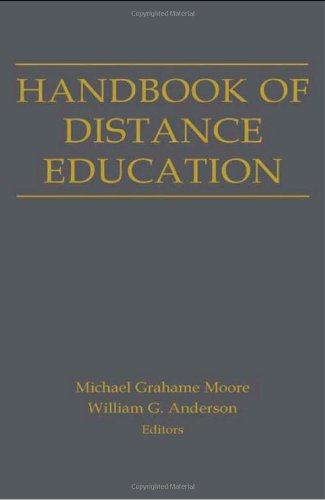 Handbook of Distance Education
View PDF here

Bransford et al.
Download PDF of the book or specific chapters
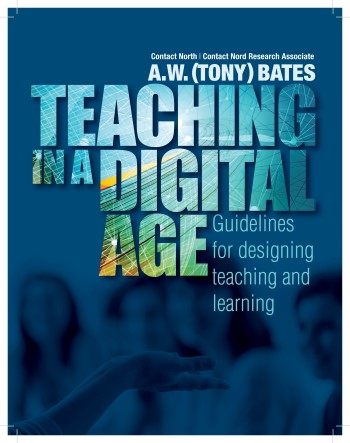 Teaching in a Digital Age: Guidelines for designing teaching and learning
A.W. (Tony) Bates
Download book in various formats
 Online Distance Education: Towards a Research Agenda
 Teaching and Learning at a Distance
 Using Technology with Classroom Instruction that Works
 Visual Literacy: A way to teach and learn
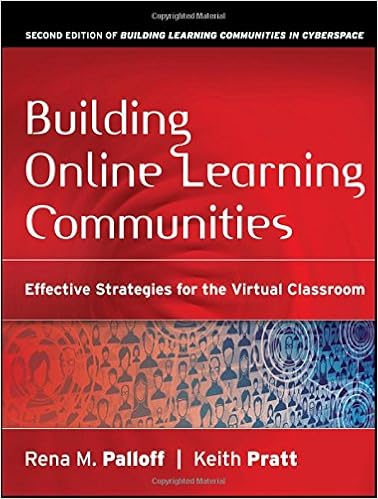 Building Online Learning Communities
 Know thy impact: Visible learning in theory and practice